How to Become a UGC Creator Without Showing Your Face
Learn how to become a faceless UGC creator with AI by building a portfolio of high-quality videos and pitching brands.


TL;DR
- UGC creators are paid for content quality, not followers.
- The "92% trust UGC" and "4x CTR" stats are recycled as current fact
- Brand collaborations cost under $300, UGC campaigns grew 133% year-over-year
- Real generation cost for a 15-30 second AI-presenter clip: roughly $1-5
- 60 Minute Creator Nodes to create UGC
You don't need an audience to make money creating UGC.
That's because brands pay for the content itself, not the person creating it. The finished videos run directly on the brand's own advertising channels, meaning you don't need to show your face, build a following, or become an influencer.
But there's a problem with most online guides: they rely on decade-old trust statistics presented as current data. This guide sets the record straight.
We'll look at the actual state of the market, separate outdated claims from reality, and break down the exact production costs involved in landing these deals.
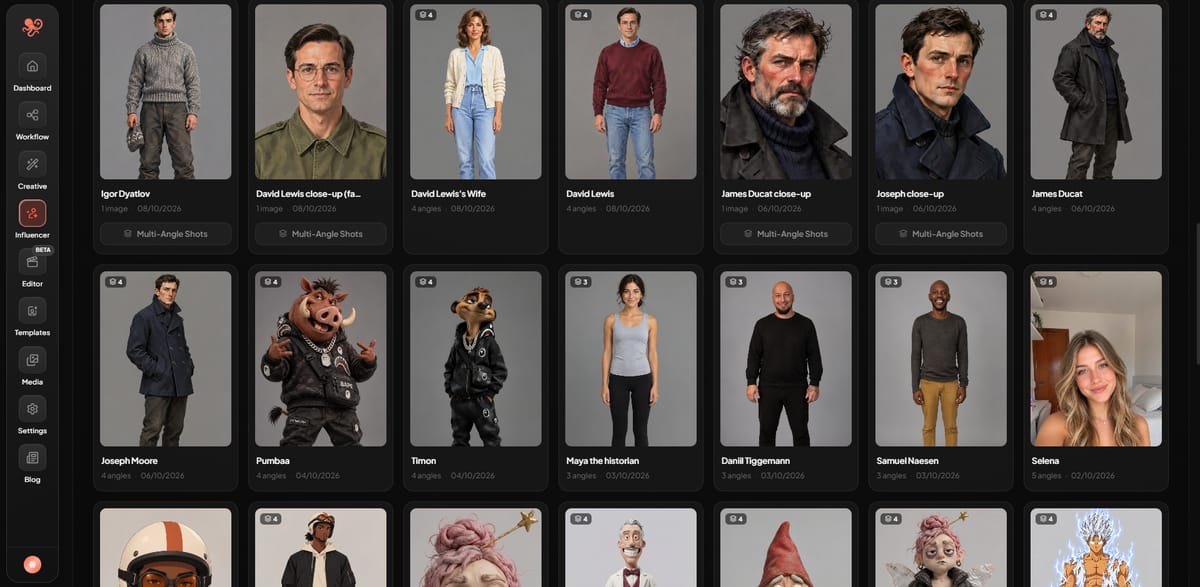
Why do brands actually pay for UGC-style content?
UGC-style video gets used directly inside a brand's own paid ad campaigns, rather than being posted to a creator's personal social media account.
That is exactly why follower count does not matter here the way it does everywhere else in the creator economy. Brands are strictly buying the high-converting video asset itself, not your audience.
The real market data backs this up.
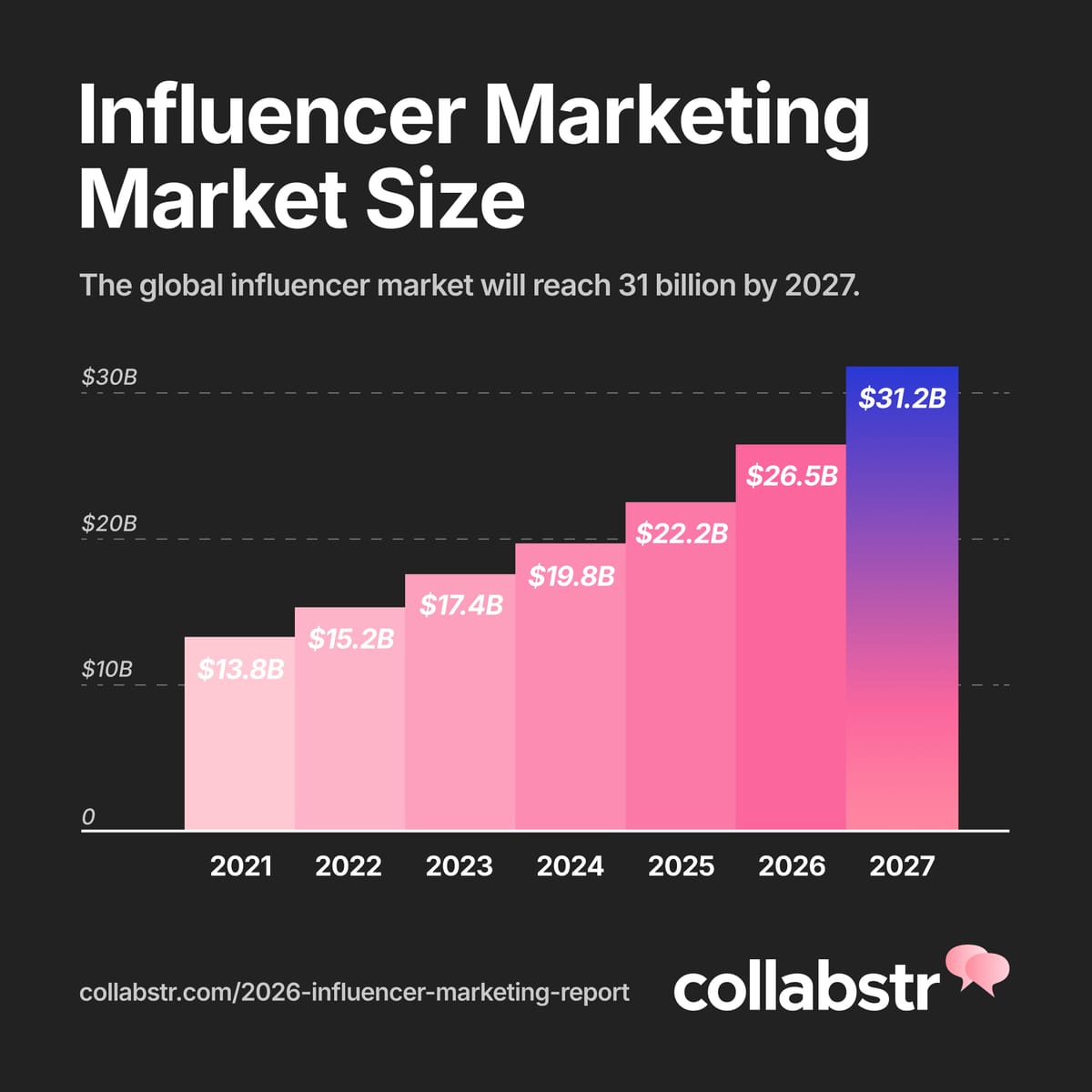
The Collabstr 2026 Influencer Marketing Report analyzed more than 21,000 actual paid collaborations on their marketplace. They found that nearly 80% of all brand collaborations cost under $300, with another 18% landing between $301 and $1,000.
UGC campaigns specifically grew by a massive 133% year-over-year. It remains one of the absolute fastest-growing content formats in the industry right now.
Is the "92% trust UGC" stat actually true?
You will see this specific figure absolutely everywhere: "92% of consumers trust user-generated content."
It traces back to a real study Nielsen's Global Trust in Advertising report. The problem is that the study was published in April 2012. Worse, it measured general trust in earned media and word-of-mouth recommendations, not modern UGC video format specifically.
A similar story applies to the widely repeated claim that UGC ads see four times higher click-through rates. That figure comes from a single article tracking early Instagram ad experiments all the way back in January 2019.
The industry has completely changed since then.
Using these outdated numbers to plan your current business strategy is a massive mistake. Neither number is fabricated. They are just far older than the "2026" framing most gurus attach to them.
The honest takeaway here is simple.
User-generated, authentic-feeling content has traditionally outperformed polished, corporate studio ads. That is a real, durable pattern of human behavior.
Which faceless UGC format should you actually use?
Not every product works the same way without a face on screen. Four real formats cover almost everything that brands actually pay for:
Hands-Only POV: This includes cracking an egg, applying a skincare product, or typing on a laptop. The camera essentially becomes the creator's eyes. It works incredibly well for cooking, beauty, and physical unboxings.
Screen Recordings with Voiceover: This format focuses heavily on apps, software, and digital products. You do not need to generate any complex visuals beyond a clean screen capture and a calm, clear narration track.
Static Product Shots with Voiceover: This involves placing a product on a clean table and using a slow, steady zoom. Because the visual is so simple, your script does all the heavy persuading. It is the cheapest format to produce and works perfectly for straightforward physical goods.
AI Presenters: This is a digital avatar talking directly to the camera. It is the only format that requires a consistent face, which you build using advanced lipsync and voice generation tools together. It is best for testimonial-style or high-trust categories, like health and finance where a human face genuinely drives conversions.
Your goal is to pick the exact format that matches the product, not the one that is simply the easiest for you to generate.
How do you actually generate a UGC-style clip without a camera?
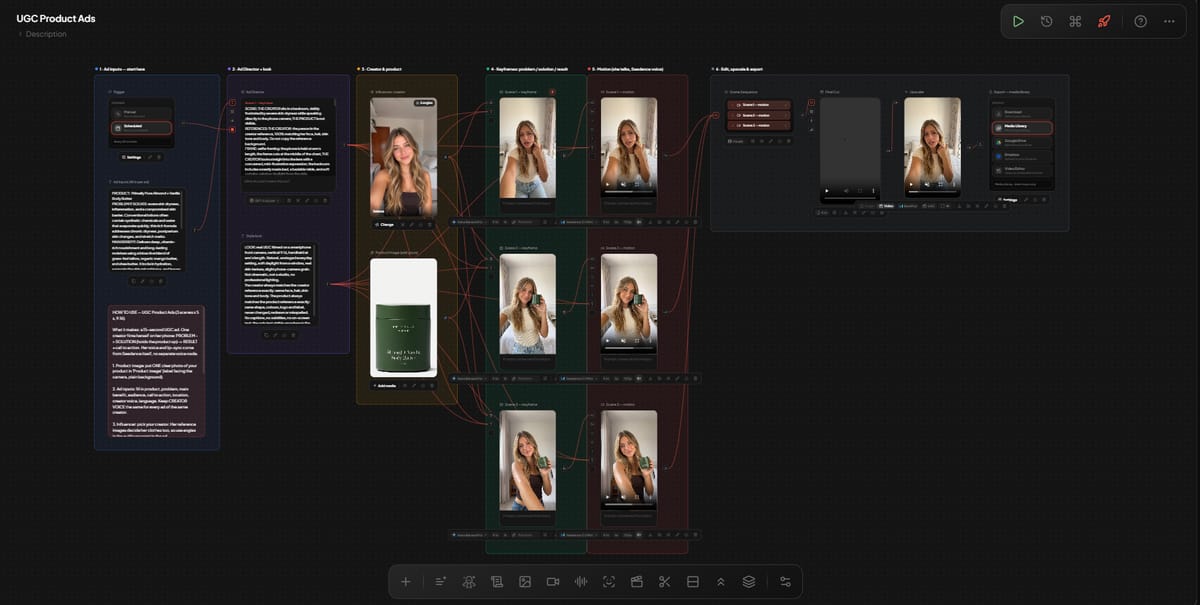
To automate this process, you run everything through a single, continuous node chain:
Agent Node: Writes the script and custom hook based on the brand's brief.
Image Generation: Produces your visuals depending on your chosen format.
Video Generation: Produces your video depending on your chosen format.
Compose Node: Stitches the audio and visuals together into a finished ad.
Here's what the underlying models actually cost per second, cross-verified against fal.ai and OpenRouter's own pricing pages:
Model | Rate |
|---|---|
OmniHuman 1.5 | $0.16/sec |
Kling AI Avatar, Standard | ~$0.053-0.0562/sec |
Kling AI Avatar, Pro | ~$0.106-0.115/sec |
Seedance 2.0, 720p | $0.151/sec |
ElevenLabs voice | ~$0.01/sec equivalent |
What does a real clip actually cost, and what's the margin?
A standard 15-second clip runs roughly $1 to $3 in raw generation costs depending on which AI model you choose. A 30-second clip runs roughly double that, landing between $2 and $6.
Compare that to an actual, active compensation structure in the market today. One company's live UGC creator job posting offers a base rate of $50 per approved video.
On top of that base, they include performance bonuses:
$100 bonus when the video hits 100,000 views
Scaling up to $1,000 if the video reaches 1 million views
Even if you only collect the baseline payout without hitting a single view bonus, spending $2 to $6 to deliver a $50 asset leaves you with an extraordinary profit margin on your compute costs.
How Long Before You Land Your First Paying Client?
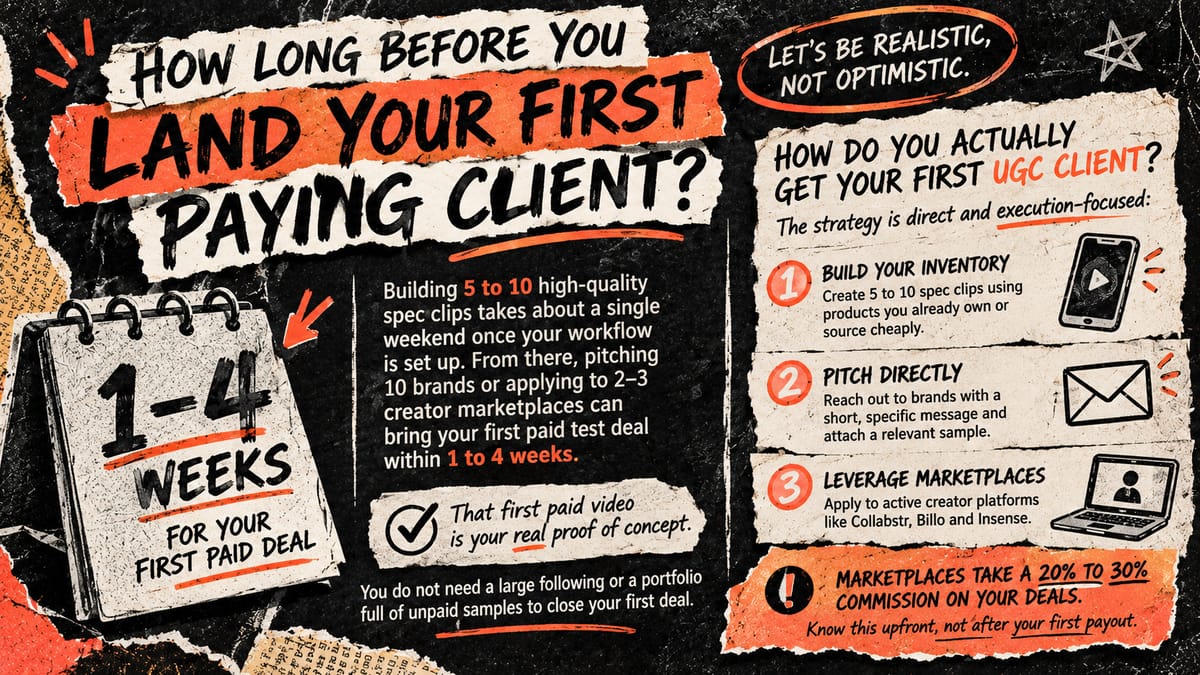
Let’s be realistic, not optimistic.
Building 5 to 10 high-quality spec clips takes about a single weekend once your automated workflow is fully set up. From there, pitching 10 brands directly or applying to two or three creator marketplaces typically produces your first paid test deal within one to four weeks.
That first paid video is your real proof of concept. You do not need a large social media following or a portfolio overflowing with unpaid samples to close your first deal.
How Do You Actually Get Your First UGC Client?
The strategy is direct and execution-focused:
Build Your Inventory: Create 5 to 10 spec clips using products you already own or can source cheaply. Make sure these are real, finished deliverables, not vague concepts.
Pitch Directly: Reach out to brands directly with a short, highly specific message and attach a relevant sample video right away.
Leverage Marketplaces: In parallel, apply to active creator platforms like Collabstr, Billo, and Insense. They carry real, daily brand demand.
Keep in mind that these marketplaces typically take a 20% to 30% commission on your deals. That is a critical structural detail worth knowing upfront, rather than discovering it after your very first payout.
What can't AI replace in this workflow?
Generation tools handle the manual labor.
They easily produce the footage, clone the voiceover, and render the digital presenter. But they cannot handle the brand brief.
Analyzing what a client actually wants, matching the exact video format to their specific product, and writing a hook that doesn't sound identical to every other generic AI clip flooding inboxes is still completely up to you.
Brands are starting to notice when a marketing video feels completely templated. The creators who secure consistent rebookings are the ones treating AI strictly as a fast production layer, not as the entire creative strategy.
FAQ
Do I need to show my face to be a UGC creator?
No. Formats like hands-only POV, screen recordings, and static product shots need no face at all, and AI presenters now cover the format that traditionally did.
Is the "92% trust UGC" stat still accurate?
The underlying pattern, authentic content outperforming polished ads, holds up, but the specific "92%" figure is from a 2012 Nielsen study on earned media generally, not a fresh 2026 measurement of UGC specifically.
How much does it actually cost to make one clip?
Roughly $1 to $3 for a 15-second clip, $2 to $5 for 30 seconds, depending on which model you use, verified directly against provider pricing.
How much can a beginner realistically earn?
Real market data shows most collaborations land under $300 per deliverable, and one live job posting offers $50 per video with bonuses up to $1,000 at a million views. Treat any number beyond that as unverified until you see it yourself.
References
- AI Guide
Was this helpful?


